
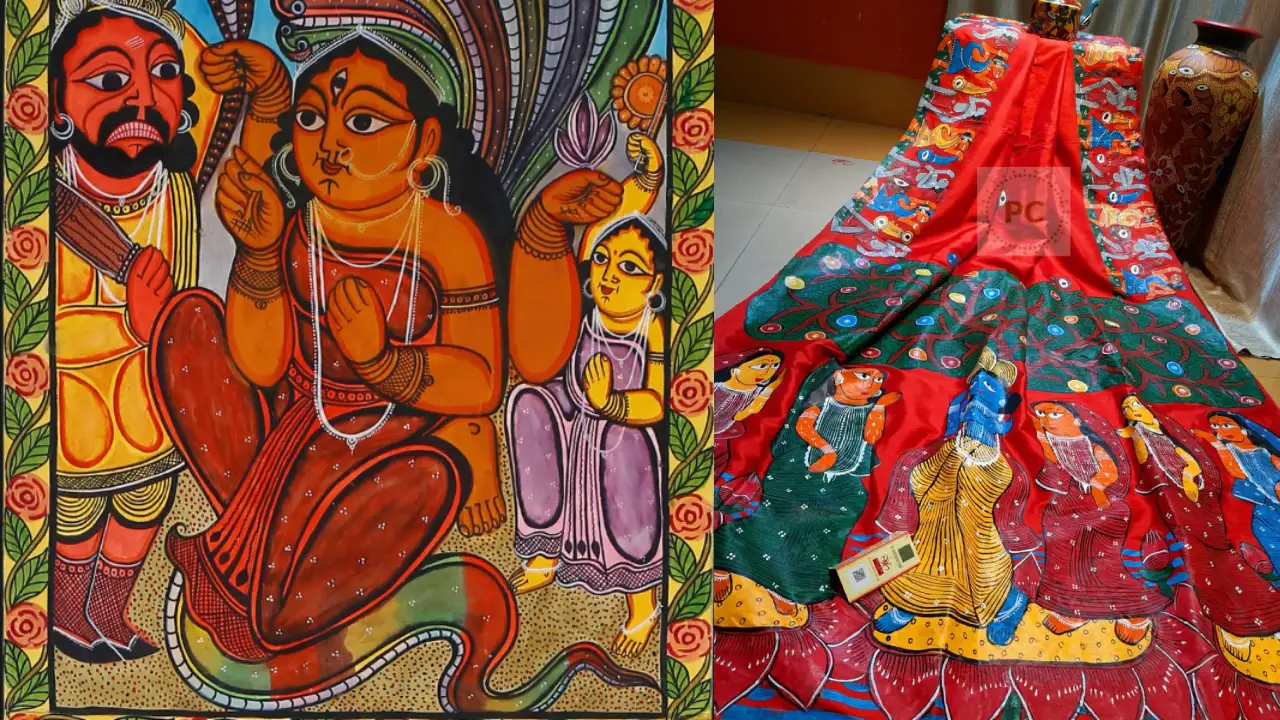
Introduction to Bengal Patachitra
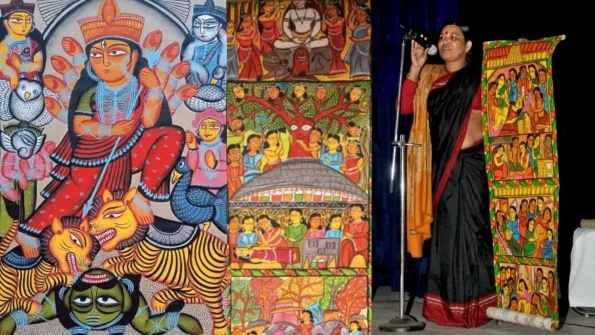
Bengal Patachitra is a traditional scroll painting art form from West Bengal, India, created by folk artists known as Patuas. The word Patachitra comes from the Sanskrit words “pata” (cloth or scroll) and “chitra” (painting). This unique art form beautifully combines painting, storytelling, and music, making it one of the most distinctive folk traditions in India.
Unlike conventional paintings, Bengal Patachitra scrolls are designed to narrate stories visually. As the artist slowly unrolls the painted scroll, they sing narrative songs called Pater Gaan, explaining the scenes illustrated in each panel. This combination of art and performance makes Patachitra truly special.
History of Bengal Patachitra
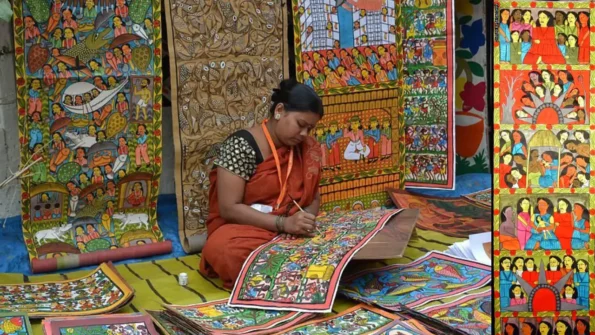
The history of Bengal Patachitra dates back over 1,000 years and is deeply rooted in rural storytelling traditions. Before the spread of printed books and modern media, Patuas traveled from village to village carrying their painted scrolls.
While singing Pater Gaan, they gradually unfolded the scroll, revealing different scenes that illustrated stories. These performances served as both entertainment and education for local communities.
Common themes historically included:
- Stories from the Ramayana and Mahabharata
- Tales of Krishna, Durga, Kali, and Shiva
- Local folklore and legends
- Moral and social narratives
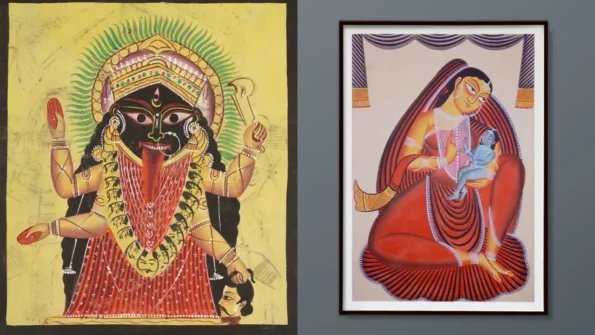
During the 19th century, an urban style known as Kalighat Patachitra developed around the Kalighat temple in Kolkata. This style featured bold lines, simplified figures, and often portrayed social satire, daily life, and religious imagery.
Artistic Style and Materials
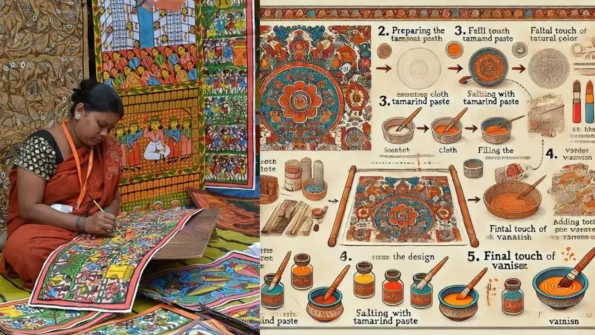
Bengal Patachitra paintings are traditionally created using natural materials and handmade techniques, reflecting the sustainable lifestyle of rural artisans.
Traditional Materials
- Canvas: Cotton cloth coated with chalk powder and tamarind seed paste
- Colors: Natural dyes derived from flowers, leaves, minerals, and soot
- Brushes: Handmade brushes made from animal hair or plant fibers
Visual Characteristics
Bengal Patachitra art is easily recognizable due to:
- Bold black outlines
- Bright, flat colors
- Decorative floral borders
- Sequential storytelling panels
Each scroll acts like a visual narrative strip, guiding viewers through a complete story scene by scene.
Cultural Significance and Modern Revival
Today, Bengal Patachitra continues to thrive as both a traditional art form and a contemporary craft. Many Patua families live in villages such as Naya in Pingla, Paschim Medinipur, which has become a well-known hub for this art.
Artists are now adapting Patachitra designs to modern products such as:
- Sarees and textiles
- Home décor items
- Notebooks and stationery
- Decorative masks and souvenirs
Events like the Pot Maya Festival celebrate this rich heritage and attract visitors, researchers, and art lovers from around the world.
Why Bengal Patachitra Matters Today
Bengal Patachitra is more than just painting—it is a living cultural archive of stories, beliefs, and social history. Through vibrant scrolls and musical storytelling, Patua artists continue to preserve centuries-old traditions while adapting to modern audiences.
As global interest in Indian folk art and handmade crafts grows, Bengal Patachitra stands as a powerful example of how traditional knowledge can survive, evolve, and remain relevant in today’s world.
